PILGRIM: 2016
The paintings and drawings in “Pilgrim” stay close to the ground and watch it change. They circle around sight, place, and the brief, vanishing moments that make a life—the before, the after, and the thin seam in between. For years the work has returned to light on a small landscape: the backyard creek when it first breaks loose in spring, the rough little field where the children play, the place where joy, sorrow, and daily chaos keep trading shifts. This is the country at hand, the few yards of earth that have seen almost everything.
The paintings begin with these backyard images, pressed between glass and mirror so that light can move through and back, flashing from behind like thought. Over this, layers of paint and text are laid down and then sanded away, as if weather were working the surface. The words enter by way of silkscreen, not as thick ink but as negative space left around them, a clearing in the pigment. Where the paint thins, more light passes. With each round of adding and erasing, earlier words drift up or sink back, half‑seen, like something remembered late. The point is not to force an image to heel but to stumble into it—through accident, error, and the small, sudden mercies that feel like grace.
The drawings follow a different path but keep the same hunger for time and sound. Here the ground is vellum, thin and almost skinlike. The image is printed first; then lines of text are built over it using dry transfer letters and templates. The words are planned on separate sheets, then carried across, letter by letter, to the drawing itself. The rows of text swing from side to side, like the antiphonal voices of Gregorian chant, building a rhythm that keeps the piece upright. Every letter is pressed down by hand and then, in many cases, rubbed away again, leaving only a faint pressure, a ghost of speech.
In both the paintings and the drawings, balance is not given; it is hunted. Each piece finds its footing through opposing actions and shifting spaces—light against shadow, word against silence, the solid world against its reflection. Layer fights layer; then they come to terms. The work keeps moving until a still point appears, a small center of rest inside the motion. That is where the painting stops, and where the viewer is asked, for a moment, to stop as well.

Beginning 2016 digital print and transfer lettering 18" x 36" (28" x 46" framed)

Discern 2016 digital transparency, mirror, glass, oil and wax 9" x 18"

Gaze 2016 digital transparency, mirror, glass, oil and wax 9" x 18"

Pierce 2016 digital transparency, mirror, glass, oil and wax 9" x 37"
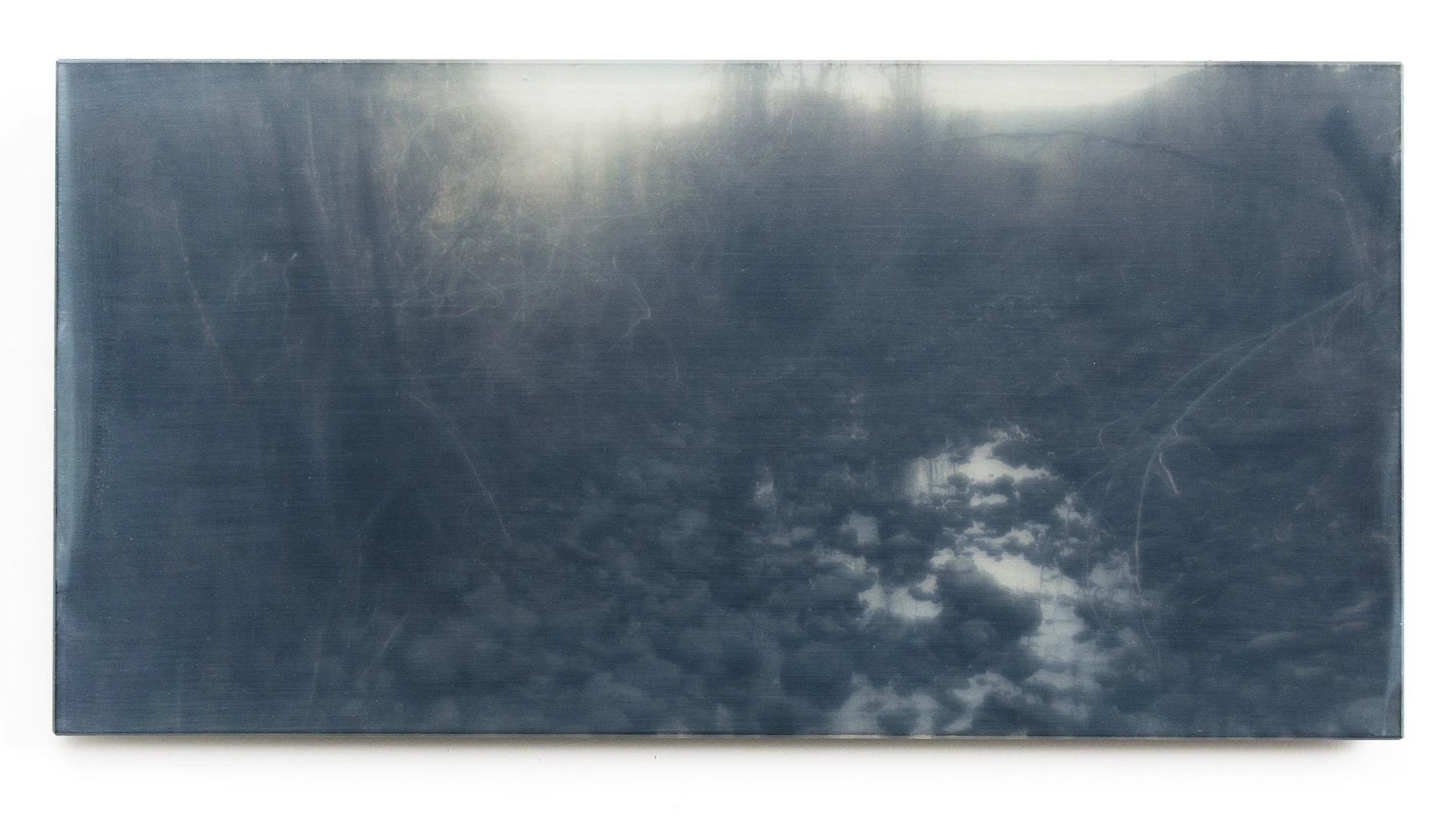
Peak 2016 digital transparency, mirror, glass, oil and wax 9" x 18"

Glimpse 2016 digital transparency, mirror, glass, oil and wax 9" x 37"

Pilgrim 2016 digital pigment print and transfer lettering on vellum 8" x 17"

Search 2016 digital pigment print and transfer lettering on vellum 18" x 36"
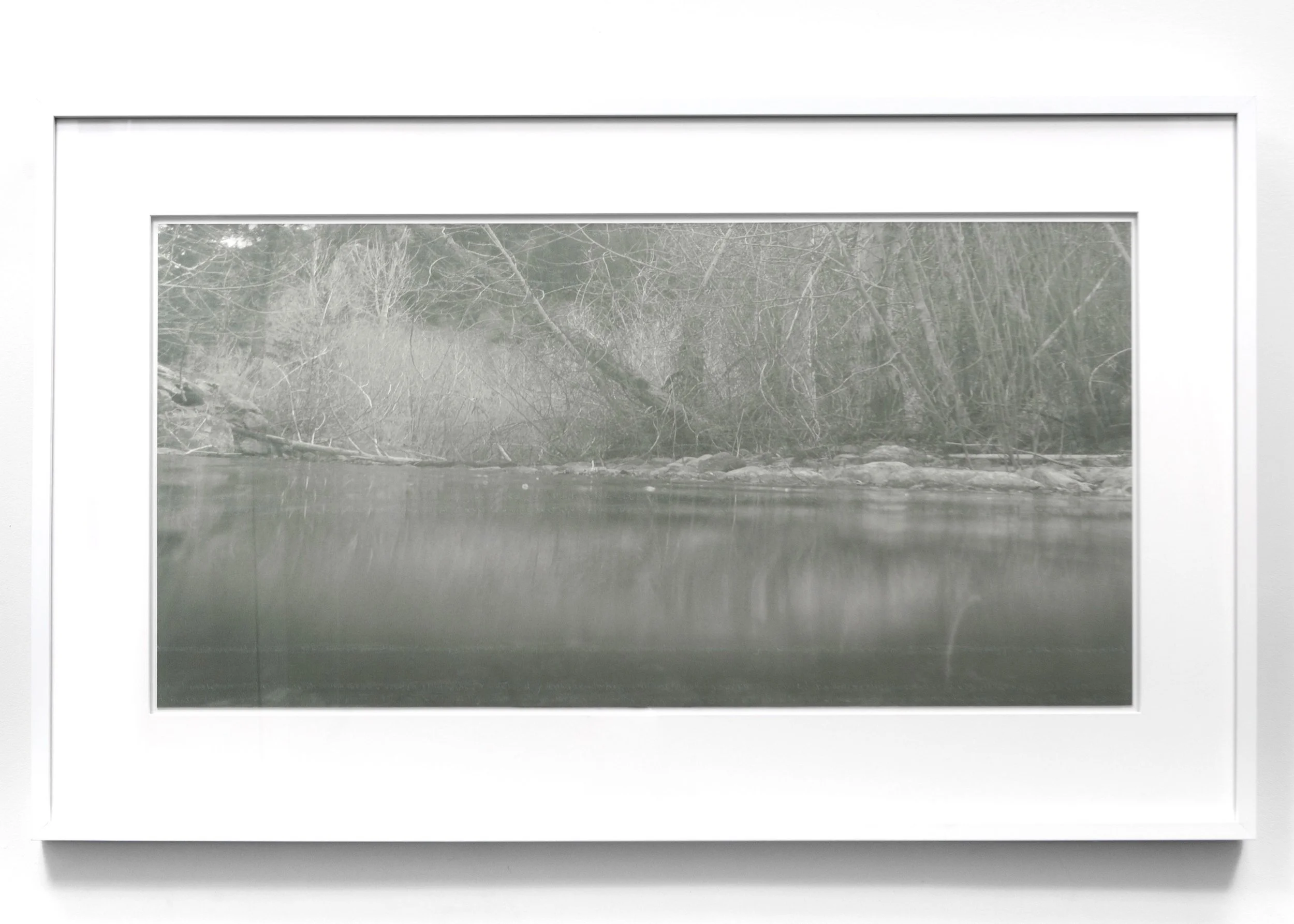
See 2016 digital pigment print and dry transfer lettering on vellum 18" x 36"

Witness 2016 digital transparency, mirror, glass, oil and wax 9" x 18"