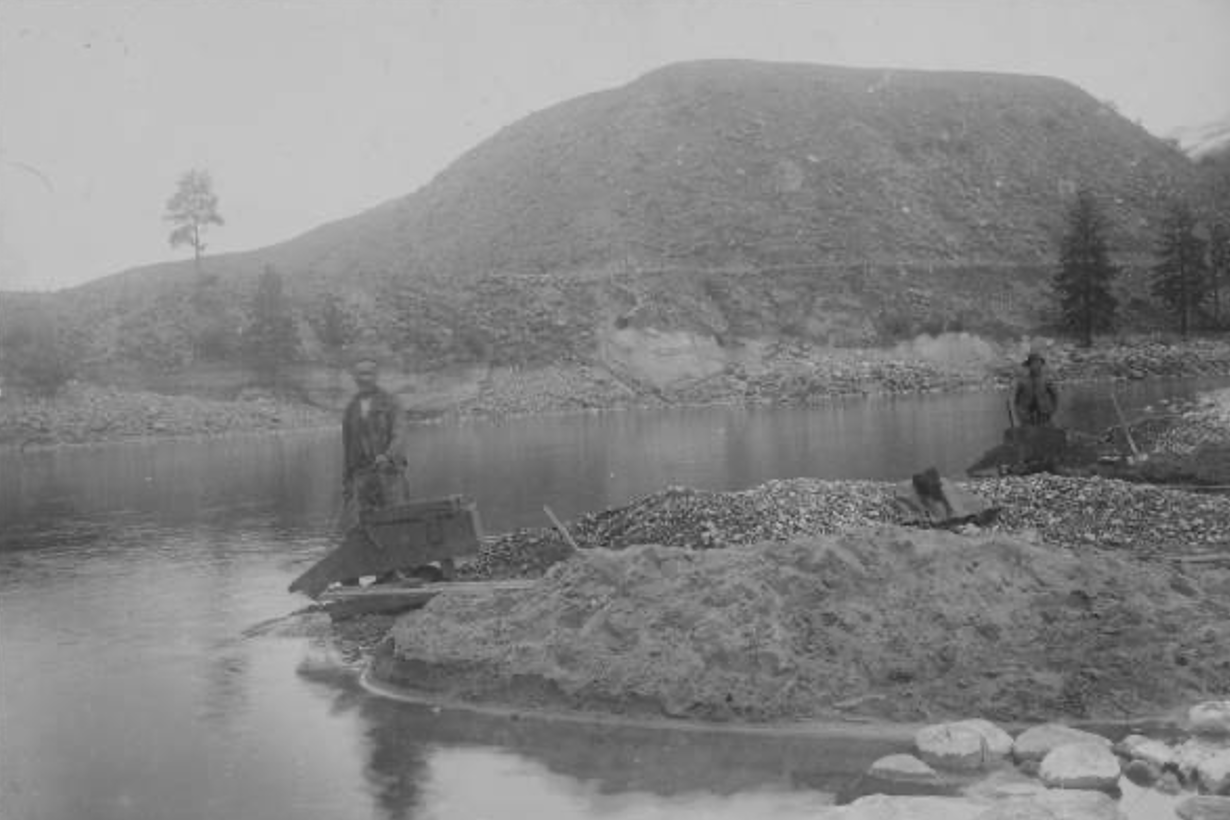
PORCELAIN, 2009
The Hells Canyon Massacre of 1887 lies in a bend of the Snake River where the cliffs rise steep and the wind keeps its own counsel. On that river, in the deepest gorge in North America, thirty‑one Chinese gold miners were killed and thrown into the current. Their bodies went downriver; the story almost did too.
The men worked a hard, narrow trade. They were Chinese placer miners, careful and practiced, washing rocks by hand and running water through flumes and ditches they built themselves along the steep banks. They worked for the Sam Yup Company out of San Francisco, far from home, living in camps along the river and pulling what gold they could from the rough country. The air in the canyon was thin with dust and river mist; the days were long and exacting.
On May 25, 1887, seven horse thieves came to their camp and turned the gorge into a killing ground. The details shift depending on who tells it: ambush or argument, robbery gone bad or planned slaughter. The end is the same. Men were shot, beaten, thrown into the river. The canyon walls held the echoes; the Snake carried away the dead. It was one act inside a wider fever of hatred that ran through the West in those years, a time when anti‑Chinese laws and violence were as common as river stones.
The place itself is a hard bowl of rock where Deep Creek meets the Snake, a natural amphitheater made of basalt and memory. The cliffs narrow; the sound of water rises and falls against the stone. To stand there now is to feel how a landscape can hold both beauty and ruin in the same frame. The wind moves through the canyon as if nothing happened. The rocks, which saw everything, say nothing.
For a long time, the country did almost the same. The massacre slipped out of common memory. It lived in a few accounts, in the grief of families far away, and in the quiet of the canyon. Then, more than a century later, a county clerk named Charlotte McIver opened an old box of records and found the trial documents. The discovery pulled the event back into the light. The papers were dry and fragile, but the words on them were sharp, naming an atrocity that had never been fully reckoned with.
Artists in the Northwest have taken up this history and turned to it with spare, modern tools: muted fields of color, altered photographs, reflective surfaces that catch the viewer’s own face. They work with the language of the land—steep drop‑offs, long horizons, the harsh glare on rock—and with the language of absence: thin, pared‑down forms, erased marks, empty space. Layers of paint are laid down and sanded back; images are shifted and blurred; mirrors and glass are used to fold the surrounding world into the piece. In this way, the work tries to show how violence can be both buried and ever‑present, how an event can be half‑erased and still binding.
Out of thirty‑one men, only ten names are known: Chea‑po, Chea‑Sun, Chea‑Yow, Chea‑Shun, Chea Cheong, Chea Ling, Chea Chow, Chea Lin Chung, Kong Mun Kow, and Kong Ngan. The rest remain unnamed in the record, though they lived, worked, and died just the same. The short list stands like a small stone marker on a much larger grave, a reminder of how easily a people’s history can be scattered and lost. The gaps in the list speak as loudly as the names themselves.
In paintings, drawings, and installations tied to Hells Canyon, the massacre becomes a lens on the wider American story: the racial violence that runs under the myth of the West, the habit of forgetting, the way official history skips over certain bodies and keeps going. The works do not pretend to fix what happened. They ask viewers to stand still with it—to feel the canyon’s scale, to see the river, to read or sense the names, and to reckon with the fact that the past does not stay buried.
The effort, whether on the page or in the studio, is not to pronounce a verdict and walk away. It is to keep the victims from vanishing a second time. By bringing this story into view—by making it visible in paint, paper, metal, and light—artists and historians try to hold open a space for grief, anger, and witness. In that space, the river still runs, the canyon still towers, and the dead are at least counted and remembered, which is the beginning, though not the end, of justice.

ECHO 2009 digital transparency, mirror, glass, acrylic, and oil paint 54" x 54"

CEASE 2009 digital transparency, mirror, glass, acrylic, and oil paint 54" x 54"

SUSPEND 2009 digital transparency, mirror, glass, acrylic, and oil paint 54" x 54"